
A beam of ordinary light holds the key to interpreting all things. Over three centuries, hyperspectral imaging has evolved from basic experiments toward spaceflight applications and the broader adoption of AI. Let’s review its development history below.
01 Theoretical foundation period (1665–1980)

In 1665, Newton used a prism to split white light, unveiling the spectrum.
In 1814, Fraunhofer discovered dark lines in the spectrum, confirming that spectra can be used to identify substances.
In 1859, spectroscopy was formally established, giving humanity a way to identify substances using light.

In 1969, the CCD chip was introduced, enabling the digital conversion of optical signals and laying the hardware foundation for spectral imaging technology.
By 1980, the relevant theories and technologies had all matured, and hyperspectral technology entered its application stage.
02
Technology implementation phase (1983–2000)
In 1983, AIS-1, the world's first airborne hyperspectral imager, was developed.
In 1985, imaging spectroscopy became an independent discipline.
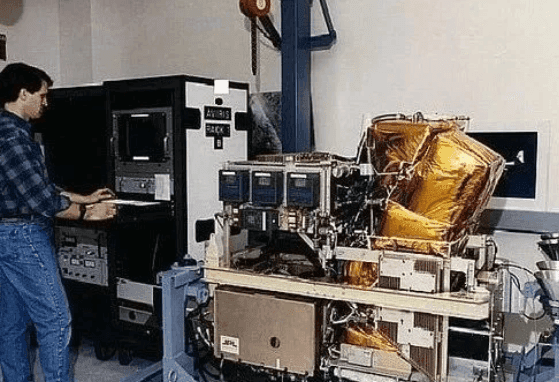
In 1987, the benchmark AVIRIS instrument was introduced and became the global industry standard.
In 1991, China successfully developed the MAIS airborne imaging spectrometer, closing a domestic technology gap while Chinese and foreign R&D advanced in tandem. At this stage, hyperspectral technology achieved end-to-end implementation across equipment, academic disciplines, and localization.
03 Rapid growth phase (2000–present)
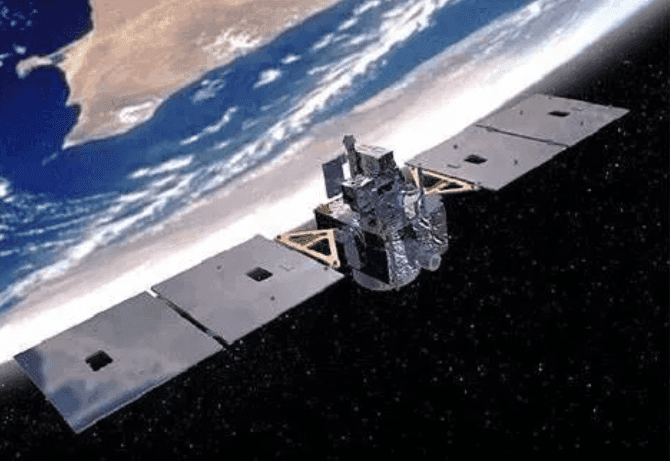
In 2000, the first commercial spaceborne hyperspectral satellite launched, and hyperspectral imaging entered the era of space-based observation.
In 2018, China's Gaofen-5 satellite was launched, with overall performance ranking among the world's best.
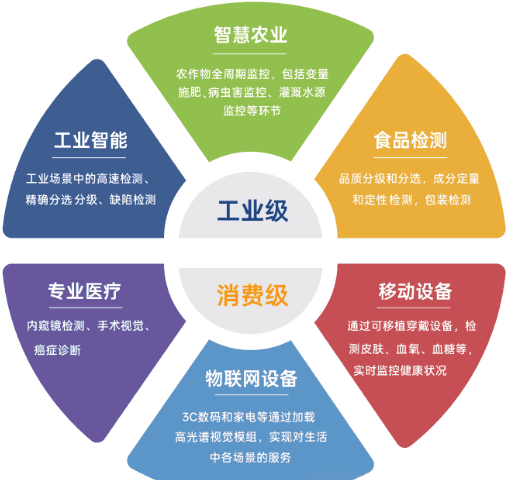
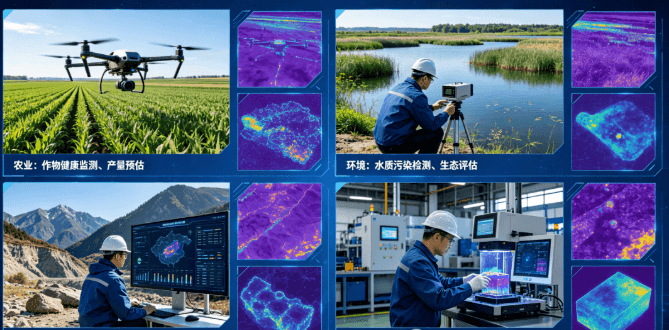
Since then, the technology has been widely used in agriculture, the environment, geology, industry, and other fields. After 2020, AI breakthroughs overcame industry bottlenecks and significantly lowered the barrier to use, moving hyperspectral technology from high-end scientific research toward broad, accessible use.
Use cases: Space-X and hyperspectral imaging

01 Commercial space rideshare: SpaceX and hyperspectral constellation buildout
SpaceX's Falcon 9 and ULA's Atlas V rockets jointly launched multiple hyperspectral satellites, including Tanager-1 and Firefly, into orbit to form a constellation. The two types of commercial rockets work in complementary ways to efficiently build a space-based spectral observation constellation, enabling remote sensing operations in ecology, agriculture, energy, and other fields.
02 Environment and carbon management: methane and greenhouse gas “space fingerprints”
Hyperspectral sensing relies on continuous narrow-band spectral identification to accurately capture greenhouse gas spectral signatures, enabling precise tracing and investigation of hidden pollution sources.
In-orbit satellites carried by SpaceX can routinely monitor oil and gas methane leaks and unusual ecological changes in water bodies, supporting region-wide carbon control and ecological and environmental oversight.
03 Precision agriculture and resource surveys: detailed identification from crop condition to minerals
Hyperspectral satellites in orbit can use vegetation spectral signatures to assess crop growth, pest and disease conditions, and soil moisture, enabling the development of intelligent precision agriculture across entire regions.
It can also identify surface alteration minerals and rare mineral anomalies, and high-frequency remote sensing observations help effectively reduce the cost of geological and mineral exploration.
04 Technical value: a spectral revolution from “visible” to “interpretable”
Compared with traditional multispectral remote sensing, hyperspectral sensing has more bands and higher identification accuracy, enabling fine-grained, material-level discrimination of ground features.
SpaceX and the Atlas series of commercial rockets are jointly helping to deploy hyperspectral constellations at scale, advancing remote sensing into quantitative, intelligent decision-making applications.
Most hyperspectral products on the market today are bulky and expensive to purchase and maintain, and they involve complex data processing and difficult on-site adaptation. As a result, most remain confined to laboratories at universities and research institutes and struggle to meet the real industrial demands of high-speed production lines and round-the-clock operation, making large-scale industrial deployment a long-standing industry challenge.
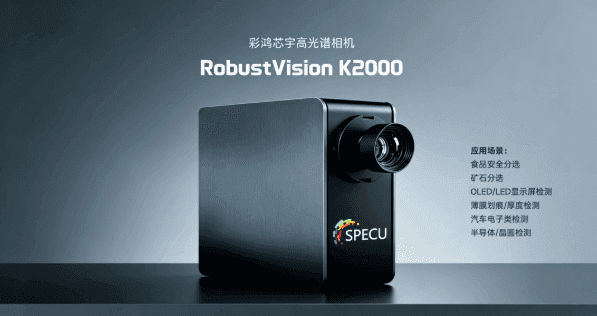
SPECU

SPECU is the first company in China to focus on the practical application of hyperspectral technology, and the first to achieve miniaturization and mass production of the equipment.
The company was jointly founded by scientists from leading universities such as Imperial College London and Harbin Institute of Technology, along with senior engineers from top companies in the global vision sensing industry. Since 2014, the team has pioneered industrial deployment overseas and has completed volume deployment and reliability validation on real production lines in vertical industries worldwide. It is one of the earliest teams in the world to deploy and commercialize hyperspectral vision technology.
On the technical side, SPECU has built three product lines based on its self-developed core hyperspectral chip technology: mass-producible industrial-grade hyperspectral modules, industrial solutions for vertical industries, and a core hyperspectral transient algorithm engine. The company is committed to enabling machines to truly “see through” the chemical composition of materials and to turning frontier technology into practical applications through its complete “chip + module + algorithm” capabilities.