

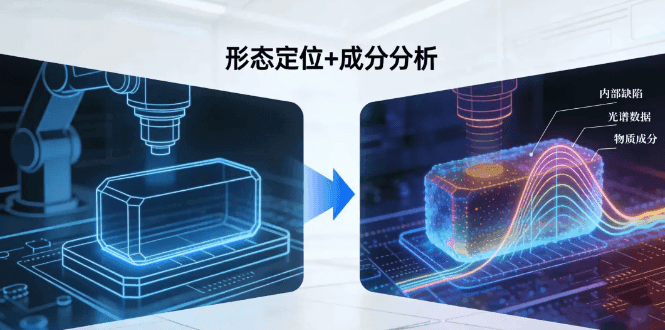
Traditional machine vision can only “see” the surface of objects and cannot look beyond appearance to identify composition and internal defects. Hyperspectral technology enables machines to “see through” materials. Combining the two creates a synergistic advantage of “shape localization + composition analysis,” advancing intelligent inspection from “surface identification” to “intrinsic analysis.”
1. The complementarity of integration logic makes it inevitable
1
Technical pain points drive the need for integration
Traditional machine vision is prone to misjudging objects with similar surfaces, cannot identify material composition, and has weak interference resistance. Its integration with hyperspectral technology is essentially about complementary strengths: machine vision handles efficient spatial localization, while hyperspectral imaging delivers precise composition analysis, addressing the industry pain point of “seeing clearly but not seeing through.”
2
Core integration goal: build a comprehensive detection system
Centered on the “spatial dimension + spectral dimension” framework, it balances efficiency (real-time detection) and precision (detecting millimeter-scale defects and identifying ppm-level compositional differences), delivering end-to-end intelligent detection capabilities covering “localization, analysis, and decision-making.”
II. Three core paths for technology integration
1
Hardware level: integrated design breaks down barriers
It primarily addresses “spatial synchronization” and “data collaboration”: synchronized triggering across multiple sensors, standardized mounting interfaces, and unified data interfaces enable seamless integration with conventional machine vision systems and PLCs, lowering the barrier to production line retrofits.
2
Algorithm layer: intelligent processing improves efficiency
Break through bottlenecks with "data fusion + intelligent analysis": pixel-level and feature-level fusion link spatial and spectral information; PCA/LDA dimensionality reduction and the SAM fast matching algorithm, combined with on-device AI deployment, enable a millisecond-level "collection-analysis-decision" closed loop.
3
Application level: practical value of scenario-based customization
Customized integrated “hardware + algorithms + software” solutions focused on industry pain points: in agricultural sorting, industrial inspection, food processing, and other scenarios, we combine the strengths of machine vision and hyperspectral technology to simultaneously perform shape positioning/grading and composition/defect detection. A unified software platform supports data visualization and automated control.
3. Industry application value and typical cases
Agricultural products: precision sorting upgrades quality control
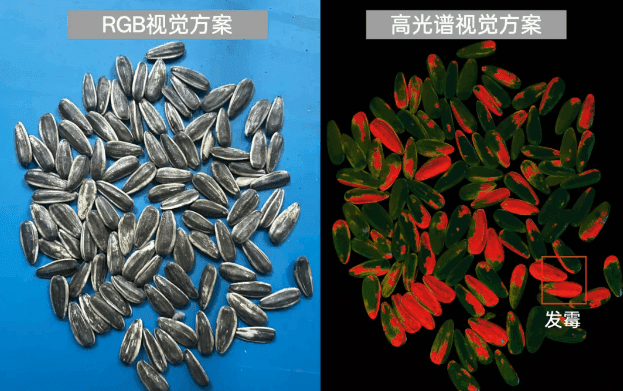
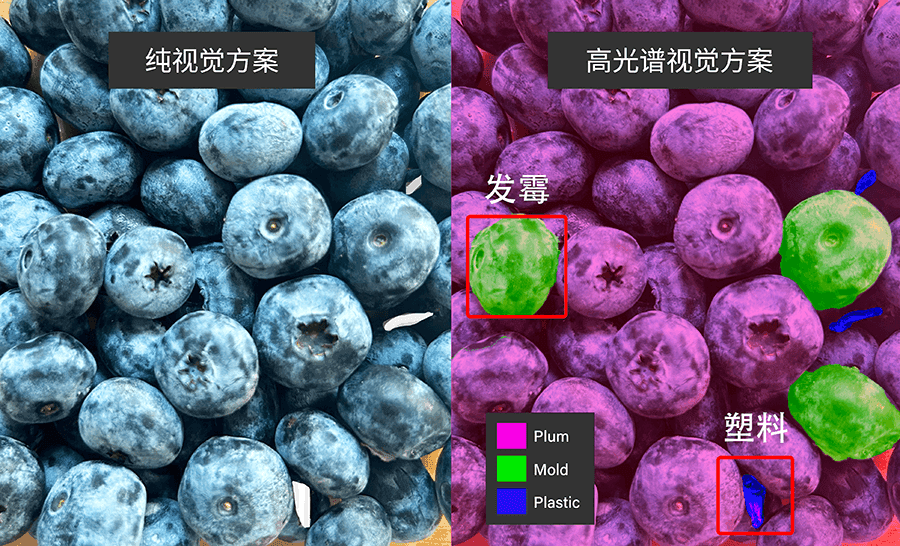
Hyperspectral technology solves the challenge of internal mold in agricultural products. The SPECU hyperspectral integrated solution uses a hyperspectral camera to locate blueberries and assess their surface condition while simultaneously collecting spectral data to quickly match and identify moldy blueberries. This enables dual screening of “appearance + internal quality,” automatically removes nonconforming products, and improves sorting efficiency and product quality.
Industry: efficient inspection reduces production losses
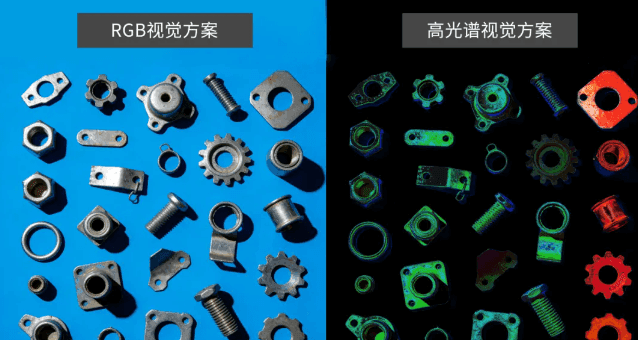
In metal sorting applications, machine vision first removes impurity regions, while hyperspectral imaging accurately identifies spectral differences among materials such as copper, iron, and aluminum. It also detects surface microcracks and other defects, supporting recyclable resource recovery and parts quality control while reducing manual inspection errors and material loss.
Healthcare: precision-assisted diagnosis improves clinical efficiency
In healthcare, SPECU hyperspectral cameras can be used for pathology slide inspection and tumor boundary identification, helping doctors accurately distinguish diseased tissue and improving diagnostic efficiency and accuracy.
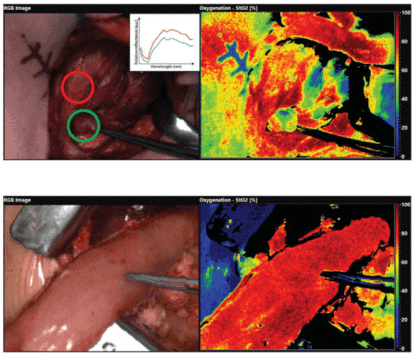
A new journey for intelligent inspection
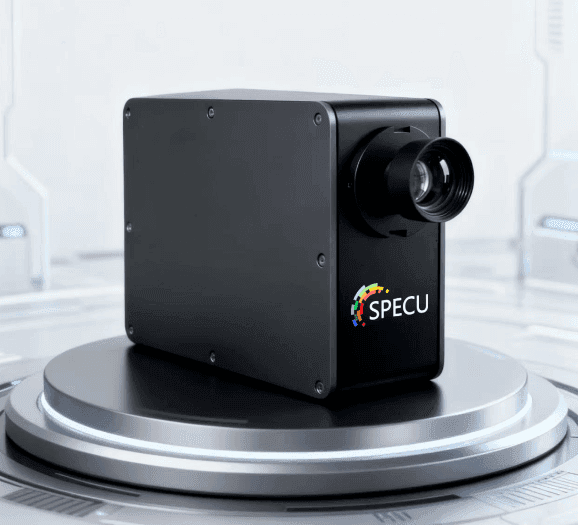
SPECU hyperspectral camera achieves a breakthrough in combining morphological positioning with compositional analysis. The camera brings together two key technical strengths: its integrated hardware design enables synchronized acquisition and data coordination, while its algorithms use efficient spectral dimensionality reduction and feature fusion to deliver millisecond-level real-time detection, balancing detection efficiency and accuracy.
Whether for agricultural produce sorting, industrial metal inspection, or food processing quality control, SPECU hyperspectral cameras provide comprehensive hyperspectral inspection solutions. They effectively address traditional inspection pain points and make SPECU a preferred choice for advancing intelligent upgrades across industries.