

For “metameric” green substances that the naked eye cannot distinguish, it can easily determine their composition; for millimeter-scale industrial defects that machines struggle to detect, it can pinpoint them precisely; and it can even provide early warning of hidden food safety hazards—these are the core strengths of hyperspectral technology. The field is now undergoing rapid growth, and China’s hyperspectral technology capabilities and industrialization level have gradually reached the global forefront, reshaping inspection standards across industries.

Image source: Instrument Network
From lab to industry: domestic technology breaks international monopoly
Hyperspectral technology is built on the fusion of spectroscopy and imaging: by capturing spectral information across hundreds or even thousands of narrow bands, it can precisely analyze the intrinsic physical and chemical properties of materials. For a long time, this technology was monopolized by European and American companies, core components depended on imports, and the high cost of equipment limited its commercial application.
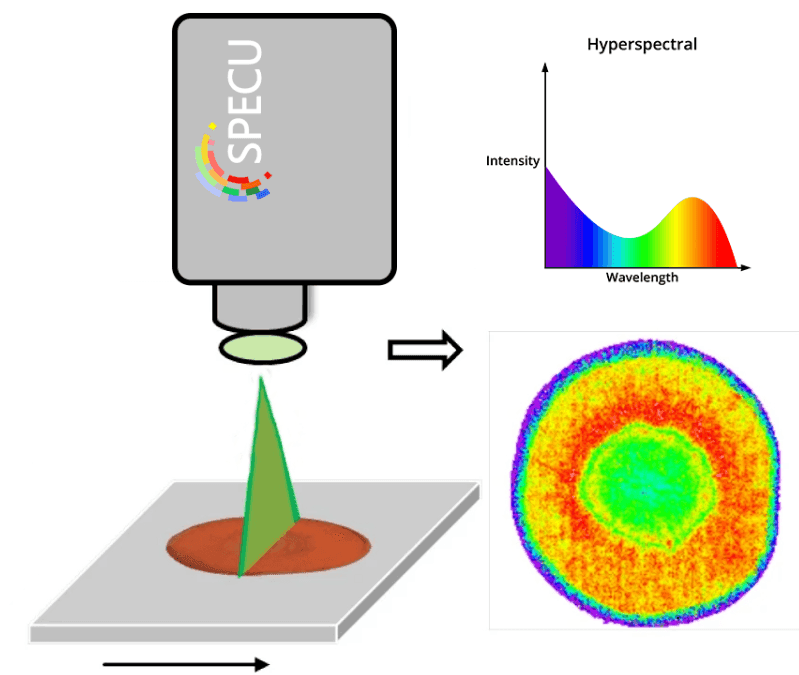
In recent years, China has made the leap in hyperspectral technology from a follower to a leader. In aerospace, China successfully developed the world's first spaceborne wide-spectrum, wide-swath hyperspectral camera, which has been carried on satellites such as Gaofen-5, with performance metrics significantly better than comparable international products. In the civilian sector, domestic companies have made breakthroughs in core technologies, gradually breaking foreign monopolies in key areas such as detector modules and spectral components. This has helped move hyperspectral equipment from laboratories into diverse settings such as food production lines, industrial monitoring, and healthcare. The application boundaries of hyperspectral technology are continuing to expand, and industrialization is accelerating.
What makes hyperspectral technology 'hardcore':
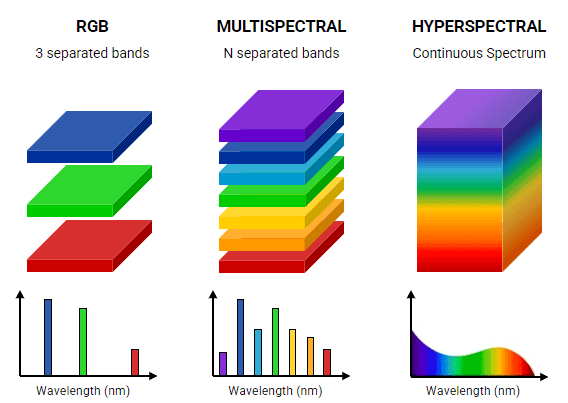
The human eye can distinguish only seven basic colors, including red, green, and blue; an ordinary camera captures at most dozens of colors. Multispectral technology can go beyond the limits of the human eye, but it can acquire spectral information only in a few to several dozen specific bands; hyperspectral technology can sense nearly a thousand finely divided spectra, with nanometer-level precision.
A capable domestic hyperspectral option: more cost-effective technology adoption
The industrialization of hyperspectral technology depends on companies with core technology and commercialization capabilities to drive it forward.
Wuxi SPECU Technology Co., Ltd. combines fully in-house, full-stack technology with scenario-based solutions to make hyperspectral technology easier to deploy and more cost-effective.

SPECU's low-compute design significantly reduces equipment investment and operating costs without compromising accuracy. Its industrial-grade solutions have been commercially deployed across food, grain, fruits and vegetables, meat, metal processing, and other applications, helping companies improve quality and efficiency. With solid technical capabilities and commercial results, SPECU has attracted backing from professional investors and is emerging as a benchmark company in the hyperspectral field, driven by both R&D and industrialization.
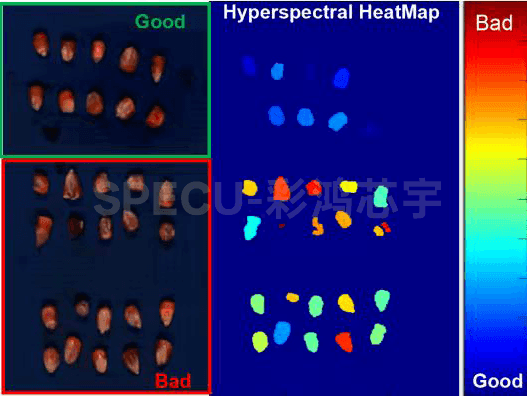
The company's globally first internal mold detection camera module has multiple successful implementation cases in the food sector:
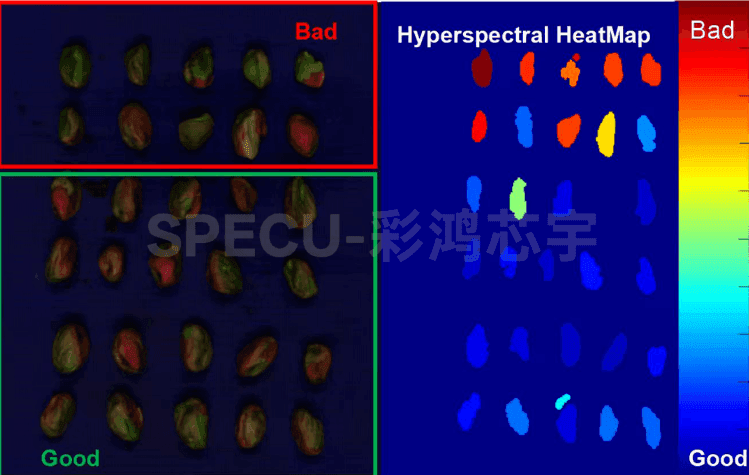
- For pistachio inspection, it accurately distinguishes good nuts from moldy, defective nuts, with aflatoxin recognition accuracy above 96%;
2. It quickly detects hidden defects in sunflower seeds, such as mold and insect damage, and is suitable for real-time quality inspection on production lines;
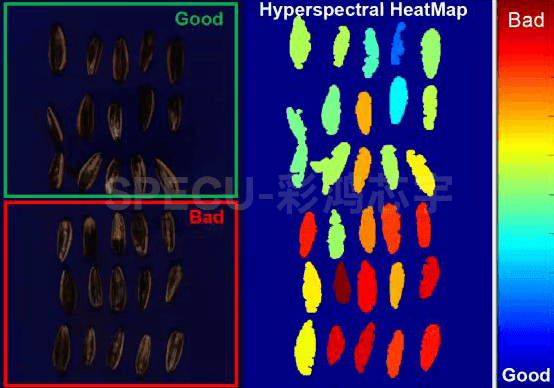
3. Testing corn can accurately identify problems such as spoilage and mold, and can also determine freshness, providing a reliable basis for storage and processing.
The development of hyperspectral imaging technology demonstrates China's strength in high-end manufacturing. As domestic companies make technological breakthroughs and move toward commercialization, hyperspectral technology is reaching more small and medium-sized enterprises and supporting more specialized applications.
The rise of domestic companies such as SPECU has not only broken international monopolies but also fully unlocked the value of hyperspectral technology. In the future, as the technology continues to evolve and costs fall further, hyperspectral technology will certainly achieve "hardcore" breakthroughs in more fields, driving the deeper development of smart manufacturing, precision medicine, and smart agriculture.