

When you crack open a crisp, savory nut, you would never guess that this seemingly healthy snack may hide a “hidden assassin” with a very high cancer risk—aflatoxin!
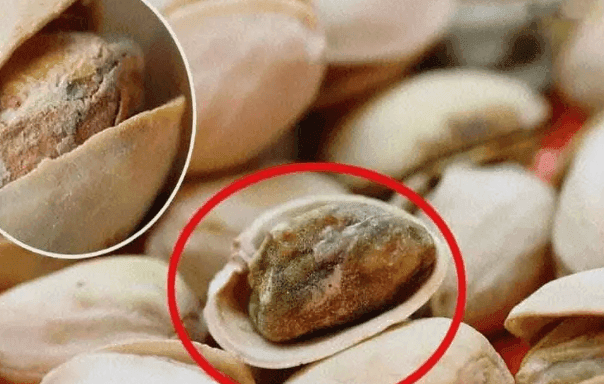
This highly toxic substance, produced by Aspergillus flavus, is widely recognized as a Group 1 carcinogen. Even very small amounts, accumulated over time, can damage the liver and lead to liver cancer and cirrhosis, and it poses an even greater risk to older adults, children, and others with weaker immune systems. Worse still, it withstands high temperatures and resists breakdown, so once nuts are contaminated, ordinary washing and cooking cannot remove it.
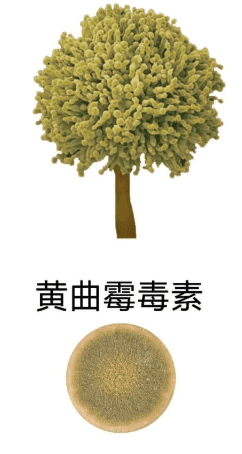
Aflatoxin
Aflatoxin (AFT) is a difuran-ring toxin produced by certain strains of Aspergillus flavus and Aspergillus parasiticus. It is a common saprophytic mold widely distributed around the world.
Aflatoxin is found mainly in moldy or spoiled grains, nuts, and seed-based foods, especially peanuts, corn, walnuts, cashews, and pistachios. Contaminated cooking oil, condiments, and dairy products such as milk may also contain aflatoxin. Its production is closely linked to high temperatures, high humidity, and improper storage.
Traditional testing
Such a dangerous toxin often slips through conventional testing. Traditional aflatoxin testing in nuts relies mostly on sampling tests and chemical analysis. The process is cumbersome and slow, taking hours or even days, and more critically, sampling carries a risk of missed detection. When the toxin is concentrated in a few individual nuts, a limited sample may miss the contamination source, allowing contaminated nuts to enter the market and creating a serious food safety hazard. For nut processors, the low efficiency of conventional testing also slows production and increases warehousing costs, leaving them caught between difficulty ensuring safety and difficulty improving efficiency.

As conventional testing repeatedly falls short, hyperspectral technology has already become a “new guardian” of nut safety screening thanks to its own strengths. Compared with conventional testing, these strengths can be described as a decisive edge.
Advantages of hyperspectral detection
FastMillisecond screening, double the efficiency
No complex preprocessing is required. Hyperspectral equipment can quickly scan an entire batch of nuts and test a large number of samples within minutes, eliminating the wait for results and significantly improving production flow efficiency.
Accuraterecognition with no blind spots, eliminating missed detections
Unlike traditional sampling-based testing, hyperspectral technology enables nut-by-nut screening. By capturing the spectral signatures of substances inside nuts, it accurately identifies each toxin-contaminated nut; even nuts with extremely low toxin levels cannot evade detection, and its detection accuracy far exceeds traditional methods.
ToughNon-destructive testing to lower costs and improve efficiency
The inspection process does not compromise the integrity of the nuts, avoiding the sample loss caused by conventional testing. This reduces costs for businesses and preserves as much of the commercial value of compliant products as possible.
Customer success stories
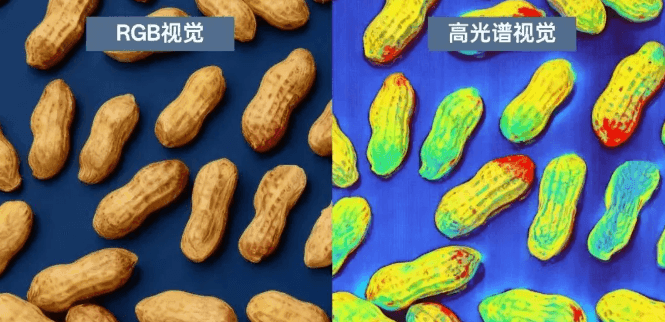
SPECU's customer cases also make the advantages of hyperspectral technology tangible. In a screening project for a peanut processing company, SPECU's hyperspectral inspection system accurately screened out moldy peanuts from a batch that appeared normal. One "toxic peanut" contained nearly 3000 PPb of aflatoxin—far above the national safety standard (the limit for aflatoxin B1 in peanuts and peanut products is 20 PPb). Had it not been detected in time, the consequences could have been severe. This precise detection helped the customer avoid the risk of a large-scale product recall and protect its brand reputation.

With food safety under growing scrutiny, aflatoxin screening leaves no room for carelessness. Hyperspectral technology, with its strong capabilities, overcomes the limits of conventional testing and builds a solid safety line for the nut industry. Choosing SPECU's hyperspectral inspection solution means choosing more dependable quality assurance, so every nut stands up to scrutiny.